


Understanding ADHD
ADHD (Attention Deficit Hyperactivity Disorder) – previously known as ADD – is a neurobehavioral disorder that affects focus, self-control, and activity levels. It is characterized by inattention, hyperactivity, and impulsivity.
ADHD is one of the most common childhood mental health disorders, affecting about 5-11% of children. Some struggle to stay focused on schoolwork, while others are overly active or impulsive. Both types may appear together, forming combined-type ADHD.
ADHD also affects executive functioning, such as planning, emotional regulation, and decision-making.
Experts agree that a combination of therapy and medication often yields the best treatment results. With the right coping strategies, individuals with ADHD can harness their strengths and live fulfilling lives.
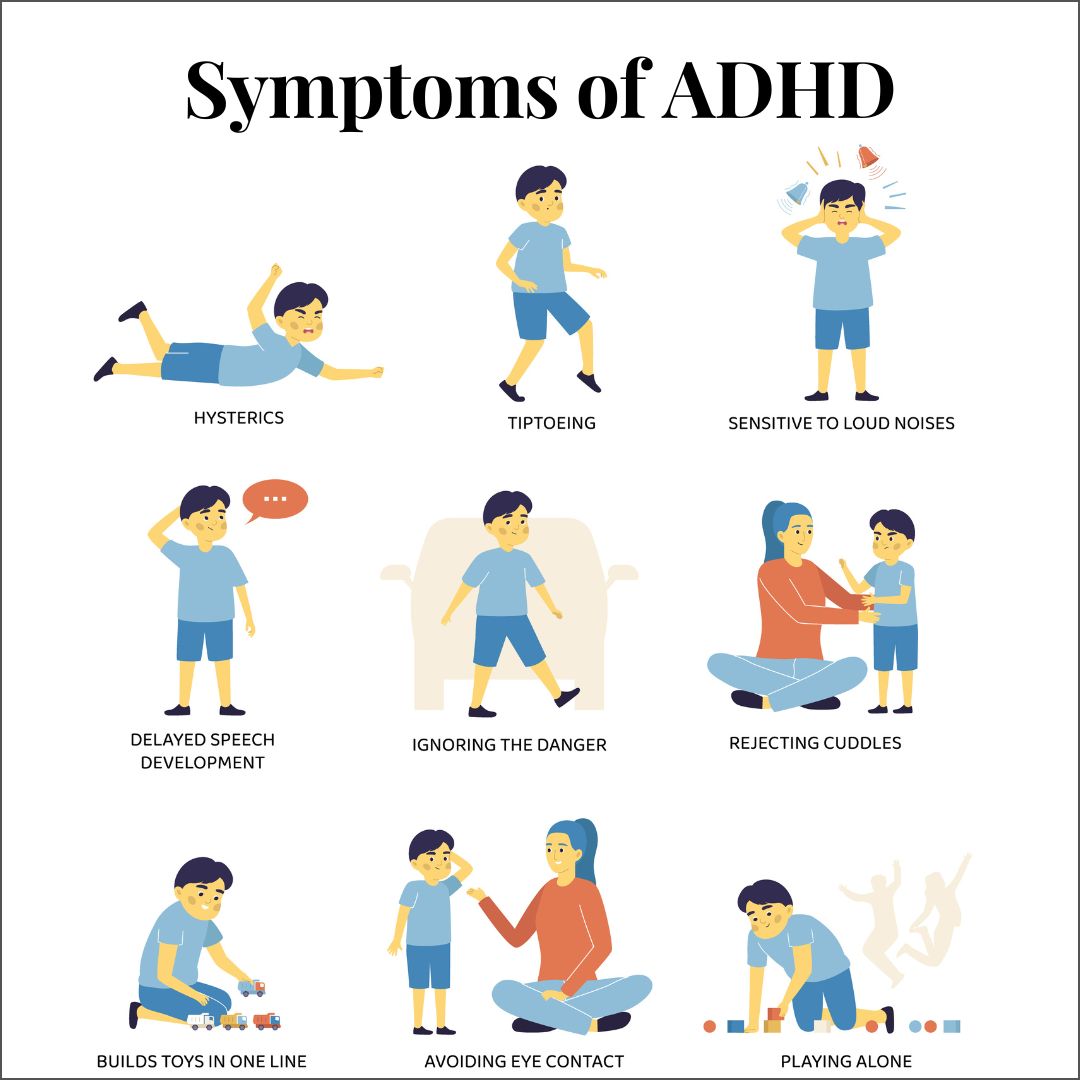
What are the symptoms of ADHD?
Symptoms fall into two main categories – inattention and hyperactivity/impulsivity.
Inattentive symptoms
Difficulty sustaining attention
Easily distracted or forgetful
Making careless mistakes
Trouble finishing tasks or following instructions
Hyperactive and impulsive symptoms
Fidgeting or restlessness
Talking excessively or interrupting others
Acting without thinking
Struggling to stay seated or wait their turn
ADHD symptoms must be persistent and impair daily functioning at school, work, or home.
In children, behaviors must be beyond typical age expectations.
For adults, symptoms must have appeared before age 12 to meet diagnostic criteria.
What causes ADHD?
The exact causes of ADHD remain unclear. Researchers believe it results from a combination of genetic and environmental factors:
Genetics: Family history plays a strong role.
Environmental toxins: Exposure to pesticides or lead may contribute.
Prenatal factors: Smoking, alcohol, or stress during pregnancy can increase risk.
Parenting styles: While not a cause, inconsistent discipline or neglect can worsen self-regulation difficulties.
Contrary to popular belief, sugar intake does not cause ADHD.
Đây là Video về ADHD
Practical advice for managing ADHD
At school
Sit near the front of the classroom to reduce distractions.
Turn off your phone during study or homework time.
Talk to teachers about accommodations, such as extra time for tests or smaller class sizes.
In daily life
Let friends know about your ADHD to build understanding.
Stay organized using planners or reminder apps.
Exercise regularly to release excess energy and improve focus.
Take short breaks while studying to refresh concentration.
Practice meditation and mindfulness to strengthen attention control.
Focus on your strengths – ADHD doesn’t define you.
For parents and teachers
Provide structure and consistent routines.
Encourage physical activity and creative outlets.
Celebrate small wins and progress.
Learn about ADHD to support your child without judgment.
Living well with ADHD
While ADHD presents daily challenges, many people thrive by developing coping skills and embracing their unique strengths. With understanding, structure, and support, both children and adults can lead balanced, successful lives.