

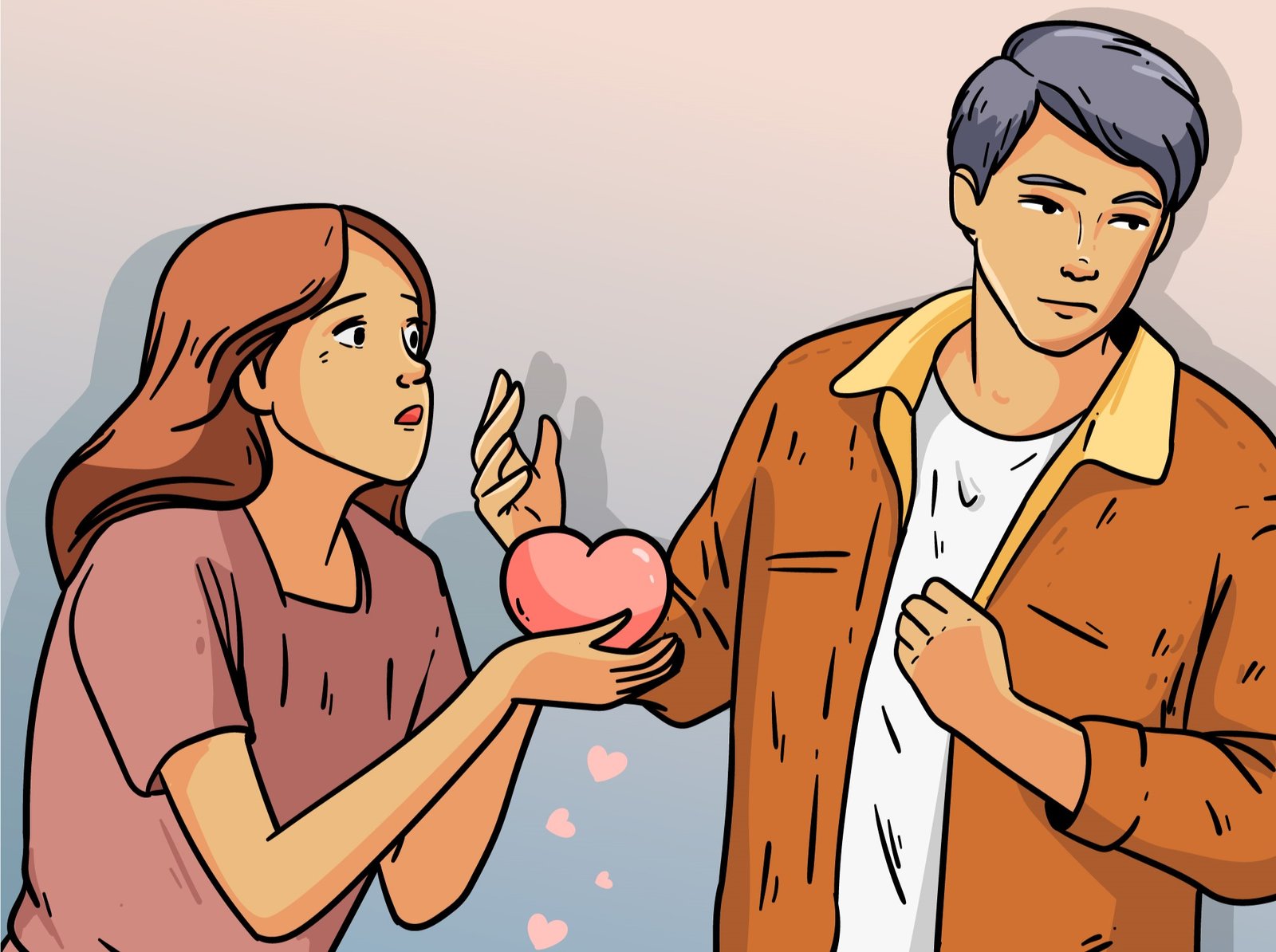
Why Do I Always Love Someone Who Doesn’t Love Me Back? – When Personal Stories Reveal Invisible Wounds
Have you ever looked back at your love life and wondered: “Why do I keep falling for people who never choose me?”
Or: “Why am I always drawn to people who are distant, unavailable, or even hurtful?”
Below is a story that many of my clients have lived through and chances are, you may find a part of yourself in it too.
When Lan Keeps Chasing People Who Never Stop for Her
Lan, 28, is a successful and independent woman. But in relationships, she repeats the same old loop:
- She likes someone
- They act distant
- Lan tries harder
- The harder she tries, the further they pull away
During a therapy session, she said: “I know they’re not right for me, but I can’t help being drawn to them. It feels like something inside me keeps pushing me to prove that I’m worthy of love.”
As she spoke, I realized something important: She wasn’t really chasing a man. She was chasing an invisible version of her past.
Why Are We Attracted to People Who Don’t Love Us Back?
1. Attachment Wounds From Childhood
People who grow up with inconsistent affection or emotional unavailable caregivers often:
Feel attracted to people who are “hard to get”
Mistake emotional distance as a sign they should try harder
Believe love must be earned, not naturally received
During therapy, Lan recognized that her father rarely showed affection.
The less attention she got, the more she tried.
Unconsciously, she kept repeating this dynamic in every relationship.
2. The Brain Gets Addicted to Emotional Highs and Lows
Loving someone who doesn’t love you back creates a cycle:
hope → disappointment → waiting → tiny reward → hope again
This cycle triggers dopamine, the same chemical linked to addiction.
You become “hooked” on the chase, especially when you get small moments of validation.
It’s like playing a game where you lose almost every time,
but one tiny win keeps you from quitting.
3. Core Beliefs About Your Own Worth
Many people carry painful beliefs such as:
“I’m not good enough.”
“I have to work for love.”
“If they reject me, something must be wrong with me.”
These beliefs push us toward relationships that will inevitably fail, so that the failure becomes “proof” reinforcing our deepest fears.
4. Emotionally Distant People Feel Mysterious and Alluring
For some, the inability to “figure someone out” feels magnetic.
Psychology calls this the distance effect:
The farther someone is → the more you think about them → the more value you assign to them.
How to Break the Cycle of Loving Someone Who Doesn’t Love You Back
1. Acknowledge the Reality: This Isn’t Love, It’s a Wound Being Replayed
Ask yourself:
Am I really in love, or am I craving their validation?
Is this feeling familiar from my childhood?
Why do I feel “nothing” toward people who treat me kindly?
Awareness is the first step to healing.
2. Re-examine Your Attachment Style
Avoidant types often attract anxious types.
If you’re always the one:
worrying,
overthinking,
clinging, then ask yourself:
“Am I seeking a secure partner, or am I unconsciously choosing someone who will abandon me?”
3. Learn to Tell the Difference Between “Attraction” and “Compatibility”
Attraction often comes from intensity, mystery, and unpredictability.
Compatibility comes from:
safety
consistency
mutual respect
But because of old wounds, many people find “nice, stable” partners boring and chase the distant ones instead.
4. Rewrite Your Love Story
Ask yourself these three questions:
“What does a healthy relationship look like for me?”
“Do I want to love from fear or from peace?”
“If someone treated my loved one the way this person treats me, would I accept it?”
5. Allow Yourself to Receive, Not Just Give
Lan had to learn how to receive: compliments, care, consistency.
At first, it felt “strange.”
But eventually, she realized:
Love doesn’t have to hurt to be real.
When You Understand Yourself, You Choose Differently
After three months of therapy, Lan said:
“I no longer feel the need to chase anyone. If someone doesn’t choose me, I’m grateful, they just saved me my time.”
She began building new standards:
- Clear communication
- Emotional stability
- Someone who makes her feel seen and heard
Most importantly: She chose herself first.
Conclusion
Loving someone who doesn’t love you back isn’t your fault. It’s a story that was written long before you learned what love even meant.
But once you understand the root, you gain the power to rewrite the ending.
If you want to explore your patterns of love, attachment, and emotional wounds more deeply, therapy can be a safe and transformative path forward.